
How can you optimise B2C and B2B logistics with a single provider?
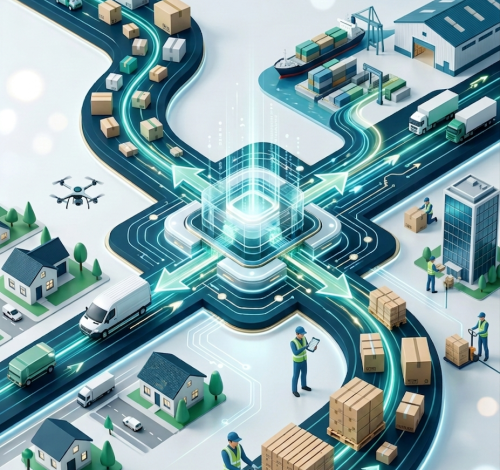
The benefits of centralised logistics
Managing B2C and B2B separately seems like the obvious thing to do. However, this approach creates far more complications than it solves. 🔍 In reality, two separate organisations mean twice as many tools, twice as many errors, and twice the costs.
That is why many brands are now taking a different approach. They entrust both their supply chains to a single e-commerce logistics provider. The result: complete visibility, restored consistency, and significantly greater efficiency.
In other words, logistics is no longer holding the brand back. On the contrary, it is driving the brand forward.
The challenges of managing both B2C and B2B simultaneously
Radically different operational requirements
At first glance, delivering to a consumer and supplying a retailer might seem like the same job. In practice, however, the constraints are worlds apart. 📦
On the one hand, B2C demands short lead times, carefully packed parcels and responsive returns management. On the other, B2B requires bulky pallets, precise labelling and strict delivery slots. Consequently, when these two workflows coexist without a shared organisational framework, teams are constantly navigating conflicting rules. As a result, errors pile up and growth slows down.
The risk of costly duplication
Furthermore, separating the two activities inevitably leads to operational duplication. In practical terms: duplicate stock records, orders processed twice, and carrier data that doesn’t synchronise. 😓
However, every duplication comes at a direct cost. Every undetected incident leaves a trace. Thus, what appears to be a mere organisational mess quickly becomes a reputational issue.
A lack of clarity that paralyses
Finally, the most overlooked issue remains the lack of an overall view. 📊 When B2C and B2B data are scattered across siloed tools, it is impossible to gain a clear picture. As a result, decisions are made late, based on incomplete information. And this is precisely where stock-outs, unnecessary overstocking and unexplained delays arise.
The benefits of using a single logistics provider to centralise everything
A unified inventory system that streamlines everything
The first tangible benefit: the elimination of fragmented stock. ✅ Rather than spreading its goods across multiple warehouses, the brand has a single, real-time inventory system.
As a result, the same stock item can be used to fulfil an individual order in the morning and a bulk shipment in the afternoon. This makes the allocation process much smoother. Furthermore, stock levels can be managed with far greater precision, which automatically reduces errors and wastage.
Seamless coordination across channels at last
Furthermore, centralising your multi-channel logistics significantly improves coordination between teams. 🔗 All stakeholders share the same tools, data and metrics, whether dealing with a single parcel or a supermarket delivery.
As a result, adjustments are made in real time. When there is a surge in online orders during a peak period for wholesale deliveries, priorities are adjusted seamlessly. What’s more, this flexibility reduces processing times across all channels.
Lower costs, less hassle
Ultimately, a single service provider is structurally cheaper than two. 💡 By combining B2C and B2B volumes, the brand gains access to more favourable shared rates for transport, packaging and labour. Furthermore, eliminating friction between systems reduces incidents. And fewer incidents mean fewer hidden costs to absorb.
Ultimately, centralisation is not just a matter of organisation. It is, above all, an economic and strategic decision.
How Futurlog optimises B2C and B2B workflows
Processes tailored to each channel
It is precisely to address these challenges that Futurlog has developed a differentiated approach. 🎯 Rather than applying a standard process to all workflows, each channel benefits from rules tailored to its own specific requirements.
In practical terms, an online order is carefully prepared, personalised where necessary, and then dispatched via the optimal carrier selected by the AI. A wholesale delivery, meanwhile, follows a rigorous protocol: appropriate packaging, correct labelling, and adherence to agreed delivery times. Thus, neither B2C nor B2B compromises on quality.
Complete visibility, at all times
What’s more, Futurlog gives every brand real-time access to all its operations. 📊 Through an intuitive back office and advanced dashboards, you can monitor stock levels, shipment progress and carrier performance at a glance.
As a result, decisions are made quickly. Issues are spotted early on. And teams spend less time searching for information and more time making the right decisions.
Personalised support every step of the way
Ultimately, what truly sets Futurlog apart is the quality of our personal relationships. ❤️ Every client is assigned a dedicated Account Manager. This single point of contact understands your business, anticipates your needs and responds quickly should any issues arise.
Whether a brand is in its launch phase or undergoing rapid multi-channel expansion, it is never left to face its logistical challenges alone. Indeed, Futurlog does not see itself merely as a service provider. On the contrary, it positions itself as a true growth partner, offering support, responsiveness and commitment at every stage. 🚀
Ultimately, optimising your B2C and B2B logistics with a single provider is not a luxury. On the contrary, it is the smartest decision an ambitious brand can make to move forward quickly, move forward effectively, and move forward together. 🚀
 Q&A
Q&A
 Q&A
Q&ACentralising B2C and B2B logistics with a single provider simplifies the management of supply chains, unifies stock levels and improves visibility across all operations. Instead of managing several organisations in parallel, the brand benefits from a single interface, harmonised processes and better coordination between e-commerce orders and B2B shipments. The result: fewer errors, fewer duplicates, greater responsiveness and more efficient logistics to support growth.
The optimisation of B2C and B2B logistics flows rests on three pillars: a centralised platform, processes tailored to each channel, and real-time tracking of stock, orders and carriers. The aim is not to standardise requirements, but to intelligently coordinate different requirements within a single organisation. With Futurlog, brands benefit from multi-channel logistics management capable of handling everything from individual e-commerce orders to more complex B2B shipments, offering flexibility, visibility and personalised support.
A unified inventory system enables both B2C and B2B channels to be supplied from a single stock pool, with a real-time view of stock levels. This reduces the risk of stock-outs, minimises overstocking and facilitates the allocation of stock across different sales channels. For an e-commerce brand, this is a powerful driver of logistics performance and profitability, as centralisation improves the accuracy of day-to-day management and the quality of service provided to both end customers and distributors.