
EU tax 2026: why a European logistics center is becoming essential
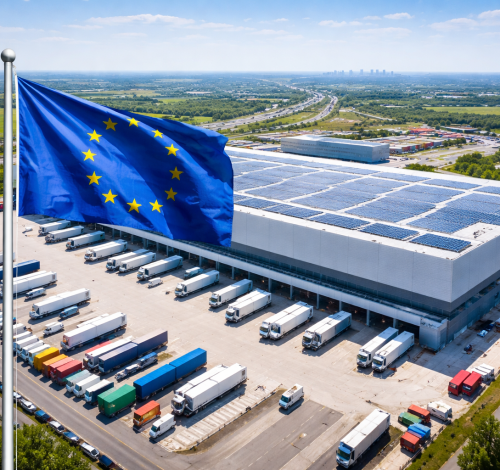
From 1 July 2026, the European Union will introduce a flat rate tax of €2 on all packages under €150 originating from non-member countries. As a result, this measure primarily targets shipments from China, the United States and other non-European markets. Moreover, it will profoundly disrupt the economy of international e-commerce.
For brands selling in Europe from abroad, this regulation represents a major strategic turning point. In this context, it becomes urgent to react quickly and intelligently. Indeed, far from being a simple administrative constraint, this tax fundamentally modifies the economic equation of online sales to Europe.
Therefore, having a logistics center in the EU is no longer an optimization. On the contrary, it has become an absolute necessity to maintain its competitiveness. That is why we are going to analyze together the challenges of this new regulation and the solutions available to international brands.
What the new European tax actually changes 🇪🇺
The measure adopted by the European Union is part of a strong political will. Indeed, the objective is to regulate a market that has become uncontrollable. As an example, in 2024, 4.6 billion parcels entered the EU from third countries. Among them, 91% came from China.
Until now, this flood of small packages was escaping customs controls. How? Thanks to the exemption from duties for purchases under €150. Thus, the products, often sold at unbeatable prices, circumvented fair trade rules.
From now on, the tax of €2 per different product comes to put an end to this unfair competitive advantage. Concretely, if a European customer orders a package containing three different products from China, they will have to pay an additional €6 in taxes. Conversely, if the same package contains three copies of the same item, the tax will be levied only once. Therefore, this distinction is fundamental to understanding the real economic impact.
Beyond the direct financial aspect, this regulation pursues several strategic objectives. Firstly, it allows fair competition to be restored with European traders who bear all the tax and regulatory burdens. Secondly, it strengthens consumer safety by facilitating customs checks on products that often do not comply with European standards. Thirdly, it generates resources to finance the strengthening of customs infrastructures, which are today overwhelmed by the volume of controls to be carried out.
On the other hand, this measure has been particularly pushed by France. Notably, the Minister of Economy Roland Lescure succeeded in convincing his European partners to accelerate its application. Initially planned for 2028, the tax will finally enter into force in July 2026. In fact, this accelerated schedule reflects the urgency perceived by the states
The impact on your economic model: the figures that matter 💰
For e-commerce brands that ship from outside the EU, this tax represents much more than just an additional cost. In reality, it calls into question the entire price structure that has allowed many players to conquer the European market. Let’s take a concrete example to measure the extent of the impact.
Imagine a brand that sells fashion accessories at €25 per unit from China, with a delivery charge of €5. So far, the total price for the European customer was therefore €30. With the new tax, this same product will now cost €32. Although this almost 10% increase in the final price may seem modest at first glance, it becomes devastating in a context of fierce competition where every euro counts.
This price increase generates several direct consequences. First of all, it mechanically reduces your conversion rate, as customers remain sensitive to the psychological price of their purchases. Then, it decreases your competitiveness against brands that already ship from the EU and do not support this additional cost. Finally, it complicates your marketing campaigns, since your customer acquisition costs increase proportionally to the decrease in conversion.
Moreover, the tax also generates significant hidden costs. On the one hand, the delivery provider, responsible for collecting the tax, will charge an administrative fee for this service. On the other hand, customs clearance times will mechanically lengthen with the strengthening of controls. Result? A clientdegraded experience and an increased risk of canceled orders. In addition, disputes and refund requests will multiply, increasing the burden on your customer service.
PWhy a logistics center in the EU becomes your best strategic asset 🎯
Faced with these new constraints, a solution is obvious: to place your stocks directly in the European Union via a logistics center in the EU. This strategy radically transforms your operating model and allows you to completely bypass the new tax since your products are already circulating within the European territory.
However, the benefits of this approach go well beyond the simple saving of €2 per product. First of all, a warehouse in the EU allows you to drastically reduce your delivery times. While a shipment from China requires 2 to 4 weeks, a delivery from a European site takes 2 to 5 days. Under these conditions, this speed constitutes a major competitive advantage in a market where immediacy is becoming the norm.
In addition, this geographical proximity also dramatically improves your customer experience. Thus, your buyers benefit from predictable deadlines, reliable follow-ups and the possibility of simplified returns. Consequently, all these elements directly contribute to increasing your satisfaction and loyalty rate. Customer reviews are improving, your reputation is strengthened and your growth naturally accelerates.
From an economic point of view, having a logistics platform in the EU allows you to significantly reduce your transport costs. Indeed, intra-European shipments generally cost 30 to 50% less than international ones, largely offsetting the storage costs in Europe. Therefore, this savings directly translates into your margins or your ability to offer more competitive prices.
Finally, this European location opens the door to new distribution channels previously inaccessible. Major European marketplaces like Amazon.de, Cdiscount or Bol.com systematically favor sellers who ship locally, offering you visibility and increased sales volumes. Physical retailers, who generally refuse to work with non-European suppliers, also become potential partners.
How Futurlog simplifies your logistics setup in Europe 🚀
Certainly, the strategic decision to establish a logistics base in the EU is clear. Nevertheless, its implementation may seem complex and costly. It is precisely to meet this challenge that Futurlog has developed a European fulfillment solution designed for international brands wishing to conquer the European market without heavy investments or operational complexity.
Above all, our network of strategically positioned centres in France and Europe allows you to cover the entire European market with optimal delivery times. Thanks to this infrastructure, you instantly benefit from a professional platform at the European level, without having to negotiate leases, recruit teams or invest in warehouse management systems.
In addition, technical integration with your existing systems is done in just a few days thanks to our connectors with all major e-commerce platforms (Shopify, WooCommerce, PrestaShop, Magento) and European marketplaces. Thus, your orders are automatically transmitted, prepared and shipped without any manual intervention on your part. Therefore, this automation allows you to focus on your core business: developing your products and marketing.
Moreover, our pricing model has been specifically designed to be accessible and competitive, even for brands in the launch phase on the European market. Unlike traditional solutions that impose high volume minimums, we adapt to your pace of growth. In practice, you only pay for the space you use and the services you need, without volume commitments or hidden fees.
Beyond the simple logistics service, our multilingual and expert e-commerce team supports you in all dimensions of your European development. Thus, we advise you on the regulatory specificities of each market, best packaging practices for European customers and strategies to optimize your logistics costs. In this way, this expertise becomes your competitive advantage against competitors who are discovering the European market.
Act now to take advantage 💡
The 7 months that separate us from the entry into force of the tax represent a strategic window of opportunity that it would be risky to ignore. Brands that anticipate this transition will gain a decisive advantage over their competitors who will wait until the last moment to react.
This anticipation allows you several concrete benefits. You can first test and optimize your supply chain without the pressure of urgency, identifying and correcting potential issues before they massively impact your sales. You then gradually build your stock in Europe, avoiding the prohibitive express delivery costs that characterize crisis situations.
The key success factors for your implementation:
- Reliable logistics partner with international e-commerce expertise
- Multi-site infrastructure to effectively cover the European market
- Seamless technical integration with your existing systems
- Expert support on regulatory and cultural specificities
This transition should not be seen as a constraint imposed by new regulations, but as an opportunity to accelerate your growth in the European market. By positioning yourself as a local player rather than a foreign seller, you gain credibility, performance and profitability.
Is your brand ready for the new era of European e-commerce? Contact our Futurlog team today to get a custom quote and find out how we can help you turn this regulatory constraint into a competitive advantage. Our experts support you in all stages of your implementation, from the analysis of your needs to the continuous optimization of your performance. 🎯
🔍Faq
The tax applies to all packages under €150 sent from a country outside the European Union to European customers. Brands that already ship from a logistics centre in the EU are not affected. For players who deliver from China, the US or other third countries, this measure will have a direct impact on prices, conversion and customer experience.
In most cases, yes.
Beyond the €2 per product, it is necessary to integrate hidden costs: administrative fees, extended lead times, lower conversion rate, increased customer service and litigation. A European logistics center not only avoids the tax, but also reduces transport costs, speeds up deliveries and improves customer satisfaction, which has a direct impact on overall performance.
It can be done without support, but solutions exist to simplify the transition. Partners such as Futurlog enable international brands to quickly deploy European logistics, without heavy investment, with rapid technical integration and support on operational, regulatory and e-commerce aspects. The objective is to transform a regulatory constraint into a sustainable competitive advantage.