
The best 3PL solutions in France for outsourcing logistics
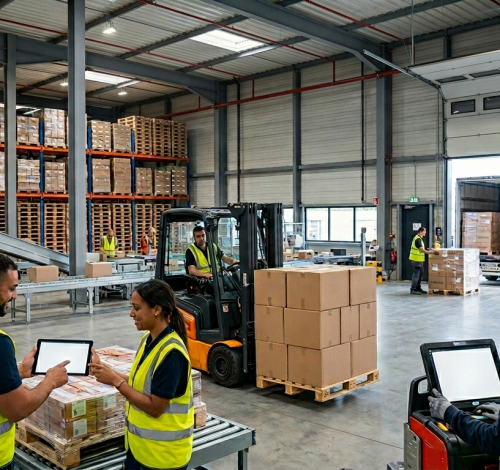
What are the best 3PL solutions in France for outsourcing logistics?
You’ve successfully launched your products, and suddenly your living room is buried under a mountain of boxes. This is the challenge facing every growing start-up: accepting that you can no longer be both a business owner and a packer at the same time. According to data from Fevad, France is the third-largest e-commerce market in Europe. Seizing this tremendous opportunity quickly becomes impossible if you spend all your evenings taping up boxes.
To take this step, the strategic approach is to outsource your logistics to a specialist, commonly known as a 3PL (Third-Party Logistics provider). Think of this logistics provider as the invisible back office of your online shop. As soon as a customer confirms their basket, this specialist team retrieves the product from the shelves of their warehouse, packs it carefully and handles the dispatch on your behalf.
Navigating the wide range of 3PL solutions in France simply requires an understanding of how they work. Let’s explore together how this logistics partnership will free up your time whilst ensuring flawless deliveries to your customers.
From the warehouse to the end customer: the four pillars of professional order fulfilment
Entrusting your stock to a French partner means moving beyond simple storage to active order fulfilment. Unlike a static warehouse where boxes gather dust, a modern logistics centre is a bustling ecosystem, designed to move your products quickly and accurately.
Every product that enters this facility follows a strict four-stage process to ensure flawless delivery:
- 1. Receiving (Inbound): Checking the accuracy and condition of incoming shipments.
- 2. Storage: Secure storage of items in designated warehouse areas.
- 3. Picking and packing: Locating the correct item and packing it securely in the appropriate box.
- 4. Dispatch (Outbound): Handing over the final parcel to local carriers, such as Colissimo.
Behind this seamless operation lies a digital brain: the WMS (Warehouse Management System) software. This centralised software tracks stock levels in real time, giving you a constant overview of your inventory to prevent the sale of out-of-stock items. When an order is placed, a warehouse specialist uses this system to ensure that the order is picked and packed to the highest standard.
Sometimes, goods bypass the warehousing stage entirely to speed up delivery. This rapid transfer from the delivery lorry directly to the carrier is known as cross-docking. The increase in your daily volumes in France makes these advanced processes essential, raising the question of what level of logistics partnership is truly suited to your growth.
3PL or 4PL: which level of partnership really suits your scale?
Building your brand requires the right support, but paying for unnecessary complexity will drain your budget. A traditional 3PL is an operational partner that physically owns the warehouses, forklifts and staff handling your products. For the majority of growing businesses looking for logistics providers for SMEs, this asset-based model is the perfect solution to day-to-day shipping challenges without adding excessive administrative costs.
Multinational companies sometimes require an additional strategic layer known as 4PL. The difference between 3PL and 4PL is clear: a 3PL carries out the physical work, whilst a 4PL acts as a project manager who does not own any warehouses but oversees several 3PLs on your behalf. This outsourcing of the supply chain coordinates large-scale operations, but involves high management costs.
There is no point in paying for a 4PL’s ‘control tower’ unless your shipments span several continents. A reliable local 3PL provides all the firepower needed to satisfy your customers. Once this solid operational foundation is in place, France naturally emerges as a strategic gateway for conquering the European market.
Why France is your strategic gateway to conquering Europe
Centralising your stock in Europe instantly reduces delivery times and costs. France is the perfect geographical hub, acting as a vast logistics platform for your brand. By storing your goods near northern cities such as Lille, parcels are just a few hours away from your British and German customers, whilst southern hubs such as Lyon provide direct routes to Spain and Italy.
Managing international taxes may seem daunting, but French customs offer a clever financial advantage. Your business can make use of a bonded warehouse. This arrangement allows your goods to be stored legally on French soil without triggering import duties or VAT until they are actually sold. This frees up vital cash flow whilst keeping stock as close as possible to your customers.
Bringing your products closer to their final destination allows for genuine optimisation of last-mile delivery. Instead of crossing oceans and getting held up at borders, your parcel is handed over directly to local couriers, which significantly reduces transit times. With this geographical advantage established, choosing a reliable partner depends on specific selection criteria.
The 5 criteria for choosing a reliable French logistics provider
Knowing that France is your ideal springboard is only half the battle; the next step is to work out how to choose a logistics provider. Before meeting potential partners, you need to draw up a set of logistics service specifications. Think of this document as a detailed architectural plan. It sets out the dimensions of your products, your daily order volumes and your specific packaging requirements, ensuring that each candidate meets your exact needs rather than making vague promises.
To weed out unsuitable companies, your tender specifications must require answers to five key questions regarding their logistics solution :
- Technical integration: Can their system connect directly to your online shop?
- Scalability during peak periods: Can they handle massive seasonal surges, such as the festive season?
- Specialised storage requirements: Do they meet unique requirements such as temperature control?
- Error rate: What is their guarantee of accuracy when picking the correct item?
- Transparency of reporting: Will you have access to real-time stock monitoring dashboards?
True synergy is achieved when their software integrates seamlessly with yours via an API: a digital bridge that instantly transmits customer orders to your warehouse teams. Combined with the ability to scale operations securely during your busiest months, this technical harmony ensures that your customers will never experience any friction caused by your growth. Once the technical capabilities have been validated, financial predictability becomes the main focus of the partnership.
Understanding your invoice: how to forecast your logistics outsourcing costs
Entering into a partnership replaces the hidden costs of packaging with predictable billing. To calculate your logistics outsourcing costs in France, divide your expenses into two simple categories. Fixed costs, such as shelf space, act like a monthly rent. Variable costs, such as order fulfilment charges, only apply when you make a sale. Calculating this cost per order (your unit cost) makes it easy for you to plan your budget.
The real financial benefit lies in pooling volumes. A logistics provider that ships thousands of parcels a day on behalf of multiple brands secures substantial discounts from carriers. You immediately benefit from these pooled rates, which guarantee a reduction in transport costs that would be impossible to achieve on your own. They also unlock the benefits of multimodal transport (combining trains and local delivery lorries) to find the most cost-effective route.
Ultimately, your return on investment isn’t just measured in euros saved; you’re buying back your time. Knowing exactly what it costs to ship a product gives you complete confidence in your pricing. However, this financial equation must absolutely take into account the management of inevitable customer returns.
Smooth returns: turning a logistical headache into a customer loyalty tool
French law grants buyers a right of withdrawal, making straightforward returns a strict legal obligation rather than an optional benefit. Managing these returns, known as reverse logistics, is notoriously stressful for growing brands. However, outsourcing e-commerce returns management to a dedicated partner transforms a frustrating administrative chore into a seamless process that ensures long-term customer loyalty.
When an item is returned to the warehouse, a high-quality outsourced e-commerce logistics service involves a crucial step: the repackaging of the stock. A specialist immediately inspects the returned product for any damage, cleans it and repackages it neatly. This swift action saves items in perfect condition, saving you money by putting them back on your virtual shelves straight away.
Behind the scenes, the warehouse software triggers a swift refund for the customer whilst automatically updating your stock records in real time. With secure processes from order placement to returns, the transition to professional logistics can be organised systematically.
Your 30-day action plan for transitioning to professional logistics
You may have started out buried under piles of cardboard boxes, but you now understand how a logistics provider can turn those time-consuming hours spent packing into a real driver of business growth. Choosing to outsource your logistics isn’t an extra expense; it’s a direct investment in faster deliveries and satisfied customers. You no longer have to navigate the postal system on your own.
Work out how many hours you currently spend on order fulfilment, then follow this 30-day roadmap to implement 3PL solutions in France smoothly and without disrupting your shipping operations :
- Week 1: Audit and drafting of the specifications
- Week 2: Research and selection of a partner
- Week 3: Technical integration and testing (API, data feeds)
- Week 4: Operational launch
In the face of rising expectations among French consumers, outsourcing your parcel preparation provides your shop with the local infrastructure needed to compete with the major players in the market. Leave the management of stock and packaging to the experts, return to your role as a business leader, and focus on the strategic development of your business.
 Q&A
Q&A
 Q&A
Q&AThere is no single “best” 3PL solution in France; rather, there is a provider suited to your stage of growth, your volumes and your specific requirements. A good e-commerce logistics solution should offer real-time stock management, reliable order fulfilment, straightforward technical integrations (APIs) and the capacity to handle your peak periods. Companies such as Futurlog stand out by combining operational execution with management tools, offering both performance and visibility to growing brands.
Outsourcing logistics saves time, reduces costs and allows you to focus on developing your brand. An e-commerce logistics provider consolidates volumes, negotiates better carrier rates and provides high-performance infrastructure and tools. The result: optimised delivery times, fewer errors and a better customer experience. It is a key driver for supporting growth without creating operational friction.
The choice of a logistics provider depends on several factors: operational reliability, cost transparency, the quality of tracking and dashboards, the ability to integrate with your existing tools, and the level of support provided. A good partner does more than just prepare orders; they help you structure and optimise your workflows over the long term. It is this approach—which is both operational and strategic—that enables solutions such as Futurlog to establish themselves as genuine growth partners.