
Why a logistics platform for your e-commerce business is becoming the real driving force behind your brand
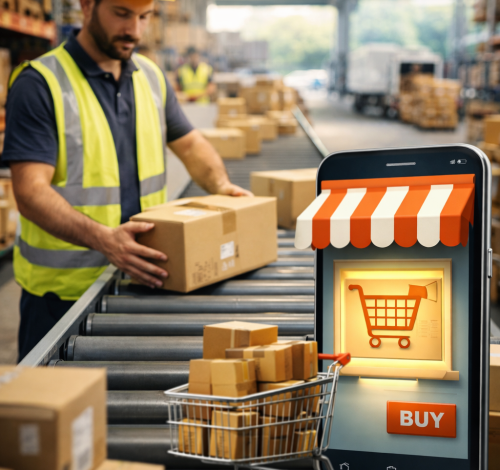
For a long time, it was believed that the growth of an e-commerce brand depended primarily on the product. However, today, this idea deserves to be seriously questioned. In reality, it is no longer the product that limits growth: it is the logistics infrastructure behind it. 🔍
In fact, many brands have stagnated not because of a lack of demand, but because their internal organisation could no longer keep up. In other words, they had the customers, the orders, and even the stock. But they lacked an e-commerce logistics platform capable of handling that volume without breaking down.
It is precisely for this reason that the perspective of e-retailers is changing. Logistics is no longer seen simply as a cost centre to be minimised. On the contrary, it is recognised as a strategic lever, one that determines whether a brand can truly scale up, or whether it will remain stuck halfway.
When the platform becomes a catalyst for scaling up
Handling high volumes without losing control
As soon as a brand starts to grow, order volumes increase, sometimes dramatically. However, without a logistics platform capable of handling these peaks, the situation quickly deteriorates. Delivery times get longer, errors become more frequent, and customer satisfaction suffers. 📦
This is precisely where the concept of logistics scalability comes into play. Unlike a small-scale operation, a true logistics platform…
This is precisely where the concept of logistics scalability comes into play. Unlike a small-scale operation, a true e-commerce logistics platform is designed to scale seamlessly. So, whether volumes double during sales periods or there is an unexpected surge due to a marketing campaign, the system holds up without compromising service quality.
Manage multiple channels from a single platform
Furthermore, multi-channel management has become a key challenge for brands that sell via their own website, Amazon, Zalando and even TikTok Shop. Without a unified platform, each channel becomes a silo in its own right. As a result, stock becomes fragmented, allocation errors multiply, and the overall view of the business is lost. 🔗
Conversely, a well-designed e-commerce logistics platform centralises all order flows within a single warehouse. This means that, regardless of the sales channel, every order is processed with the same efficiency and traceability. As a result, the brand benefits from greater consistency, and the end customer from a smoother experience.
Organising workflows to support growth
Ultimately, beyond volumes and channels, it is the organisation of growing workflows that makes the difference in the long term. Indeed, a growing brand generates increasingly complex workflows: goods receipt, order picking, dispatch, returns, exchanges…
All these movements must be carefully coordinated. Without this, even strong demand can become a problem rather than an opportunity.
The limitations of structured logistics
When processes become overwhelmed faster than growth
The first limitation of unstructured logistics is that it quickly becomes overwhelmed. 🚨 At first, managing shipments in-house or using poorly integrated tools may seem sufficient. However, as soon as volumes increase, improvised processes quickly reach their limits. What’s more, each new sales channel adds an extra layer of complexity, until the entire system threatens to collapse.
However, this overload does not always manifest itself in a dramatic way. It often starts with subtle signs: deadlines slipping, a slight increase in preparation errors, and teams spending more time dealing with incidents than optimising their work. Nevertheless, if these subtle signs are not taken seriously, they can quickly escalate into major crises.
A lack of visibility: an invisible yet decisive obstacle
Furthermore, poorly structured logistics inevitably leads to a lack of visibility into actual operations. In practical terms, without a centralised dashboard or real-time data, it becomes very difficult to know at any given moment what the stock levels are, which orders are behind schedule, or which carriers are underperforming.
As a result, decisions are made in the dark, or, at best, based on data that is already out of date. This is all the more problematic given that poor management decisions come at a high cost: excess stock, unexpected stock-outs, delivery delays… All of these situations directly undermine e-commerce growth and the brand’s reputation.
The inability to forecast demand
Finally, and this is perhaps the most underestimated problem: unstructured logistics makes it virtually impossible to forecast demand. Indeed, without reliable historical data, automated alerts and integration between sales and logistics tools, the brand is left to muddle through.
In fact, it reacts to fluctuations in demand rather than anticipating them. The result is stock shortages during peak periods, excess stock during quiet periods, and a chronic inability to prepare for predictable events such as sales, Black Friday and product launches. Consequently, what should have been an opportunity for growth often becomes a source of operational stress.
Futurlog’s approach to the e-commerce logistics platform
An architecture designed to scale
It is precisely in response to these challenges that Futurlog has developed its approach. Indeed, right from the design stage of its platform, the key question was not “how do we manage current volumes?” but “how do we support our clients’ growth in the long term?”. As a result, the solution’s architecture is designed to scale, meaning it can handle increasing volumes without ever compromising service quality. 🚀
In practical terms, this translates into a modular infrastructure capable of adapting to every stage of a brand’s development. So whether a brand ships 500 orders a month or 50,000, Futurlog’s e-commerce logistics platform remains seamless, precise and responsive. Furthermore, this scalability also applies to omnichannel management: e-commerce, marketplaces, retail and wholesale are all managed from a single stock, without disruption or friction.
Real-time management for quick and effective decision-making
In addition to scalability, Futurlog focuses on real-time management of all operations. 📊 Thanks to an intuitive back office and advanced reporting dashboards, brands have a clear and accurate overview of their logistics operations at all times. As a result, decisions are no longer made blindly; they are based on up-to-date, reliable and actionable data.
Furthermore, the intelligent selection of carriers, powered by AI via the Best Price tool, automatically optimises shipping costs based on the desired service. This means the brand benefits from the best value for money on every delivery, without having to negotiate manually with each carrier.
Operational flexibility tailored to each brand
Ultimately, what truly sets Futurlog’s approach apart is its operational flexibility. Whereas many logistics providers impose standardised formats, Futurlog tailors its solution to the specific needs of each brand.
Whether it’s for custom packaging, subscription box management, bespoke kitting or specialised preparations for B2B channels, the platform adapts seamlessly, with no hidden costs. What’s more, every client is assigned a dedicated Account Manager – a single point of contact who understands the brand and anticipates its needs.
Ultimately, Futurlog offers more than just a logistics infrastructure. It offers a genuine partnership for growth, one that turns e-commerce logistics into a driving force rather than a hindrance. 🎯
 Q&A
Q&A
 Q&A
Q&AYes, an e-commerce logistics platform enables a brand to grow faster by streamlining its workflows, improving operational efficiency and ensuring customer satisfaction. It helps to cope with spikes in volume, prevent operational disruptions and better manage growth.
Outsourcing e-commerce logistics via a specialised platform enables greater flexibility, visibility and operational efficiency. A brand can better manage peaks in activity, sell across multiple channels from a single warehouse, reduce transport costs and improve delivery times. It is also a way to focus on business development and marketing rather than on day-to-day operational management. With Futurlog, brands also benefit from dedicated support and a solution that can be tailored to their specific needs.
A standard logistics provider simply carries out operations. A true e-commerce logistics platform centralises workflows, connects sales channels, provides real-time visibility and helps the brand make better decisions. It plays a strategic role in growth, profitability and the customer experience.
The logistics you deserve are those that grow with you. Contact Futurlog to find out how its platform can become the driving force behind your brand